The whole universe, in one map you can fly through.
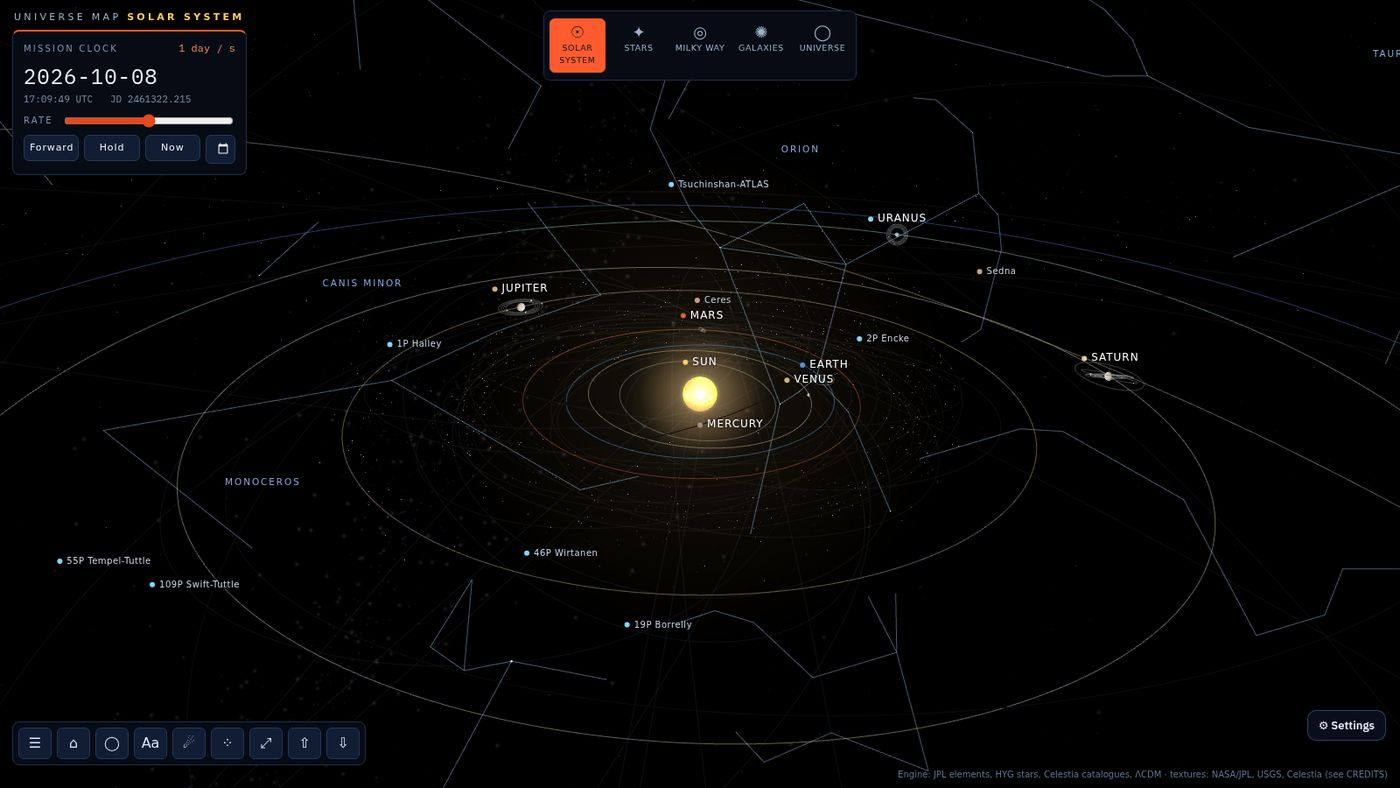
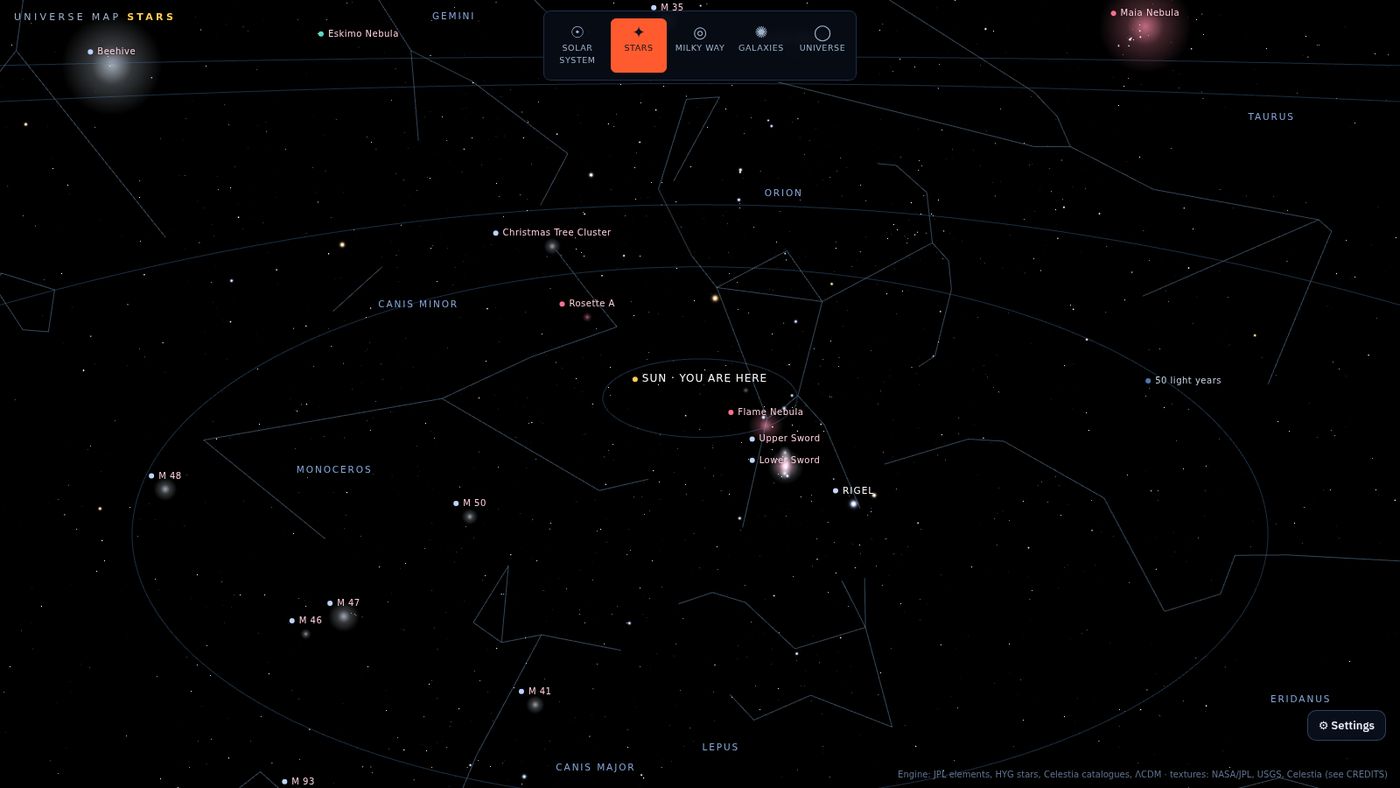
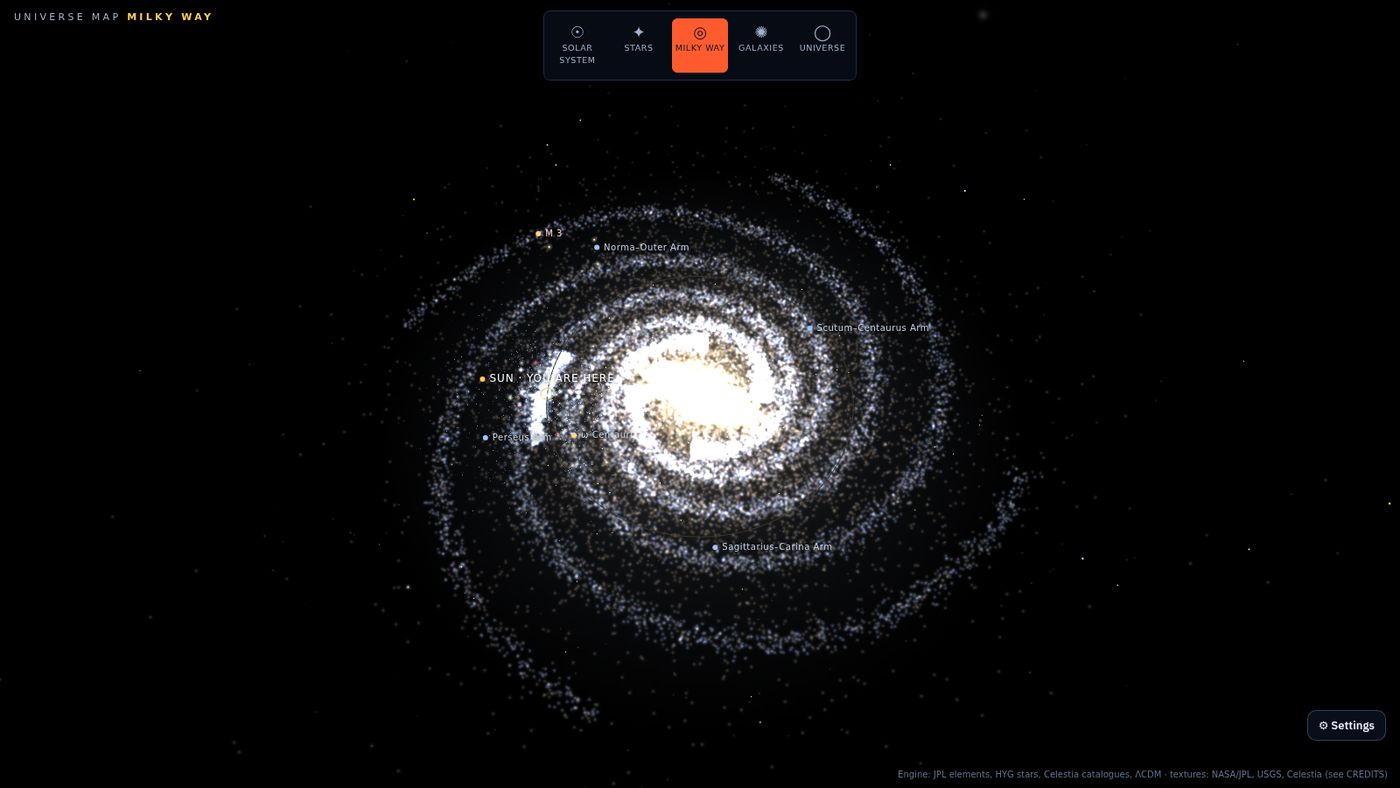
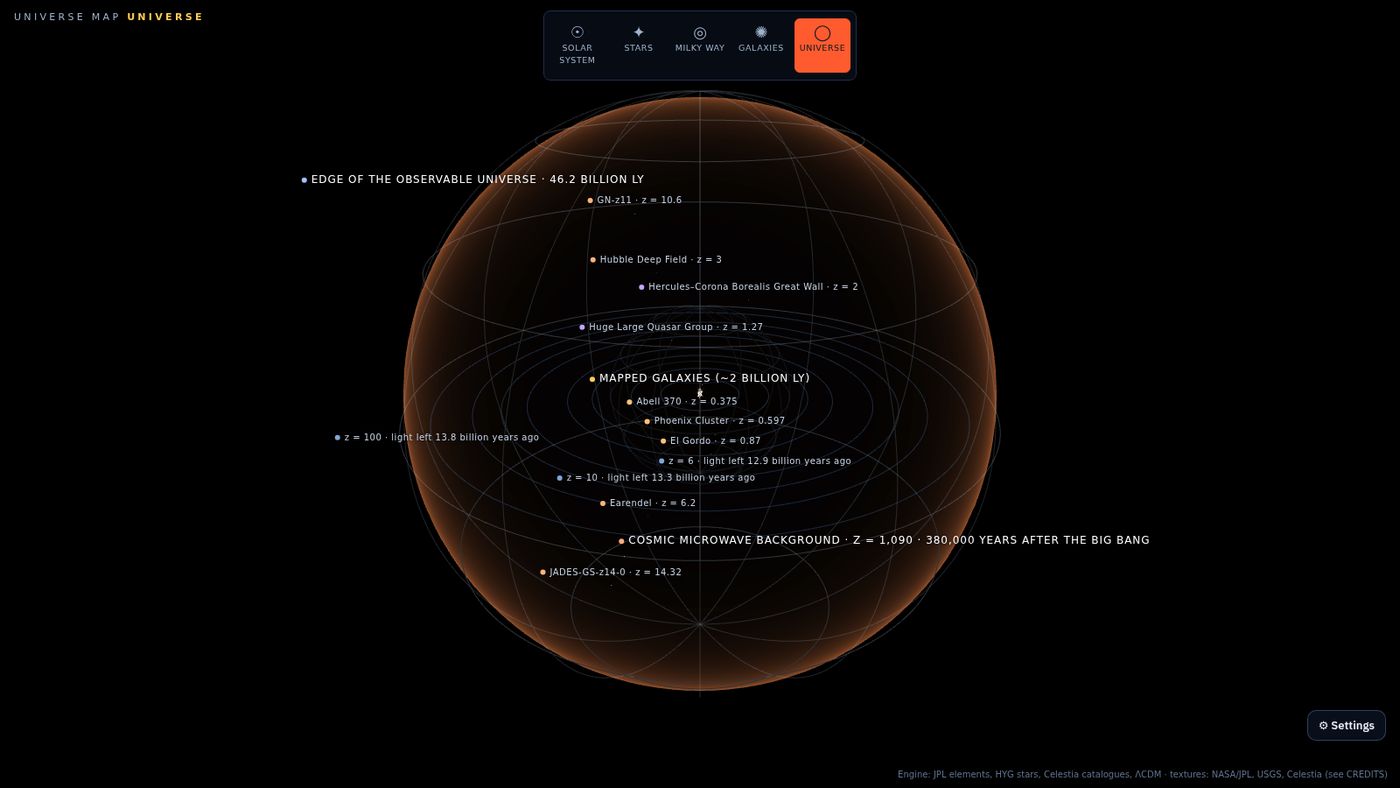
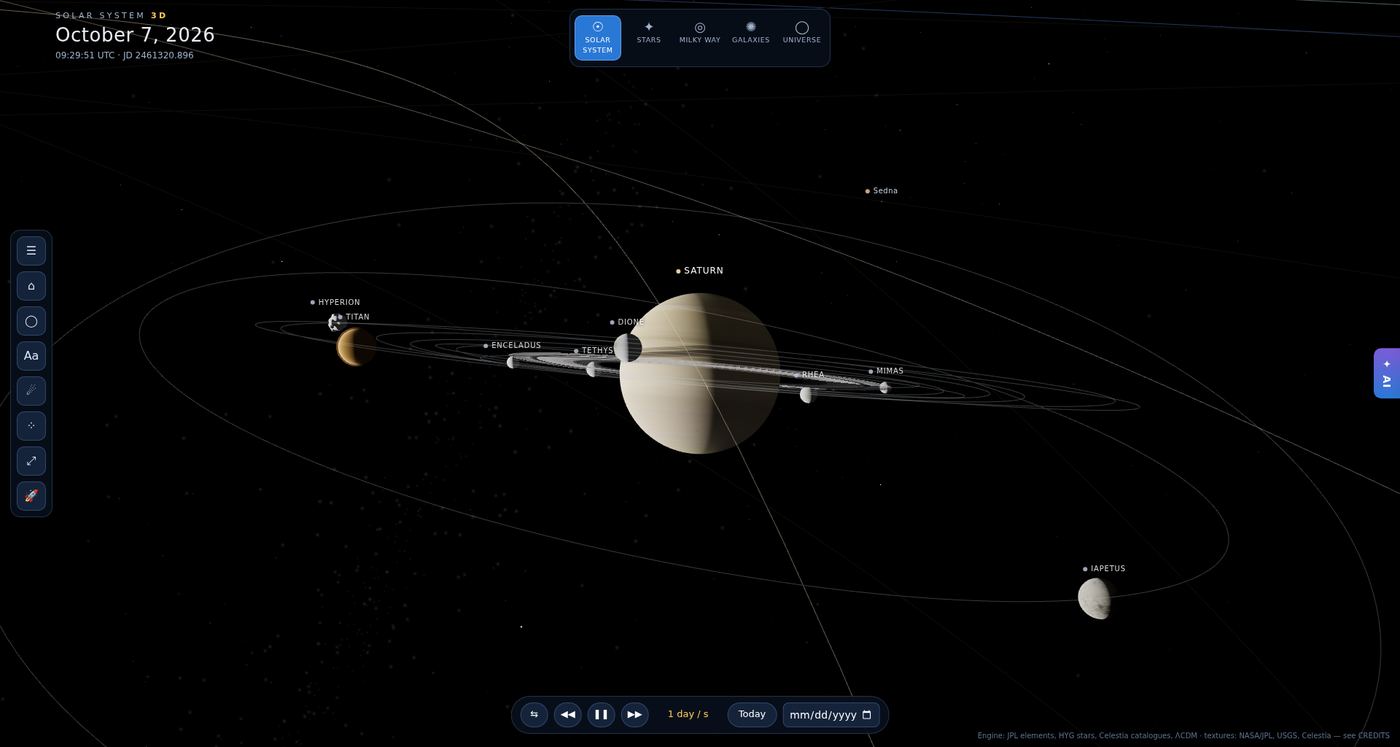
Start at the planets on today's date. Zoom out past 12,000 real stars and all 88 constellations, across the Milky Way, through 11,000 named galaxies and the great walls and voids between them, to the edge of the observable universe. Every position comes from real catalogues and real physics. Then build a rocket, pour chemicals in a virtual lab, or graph any equation: Reality ASM computes it all.
Free during the beta. Works in any modern browser, no install.
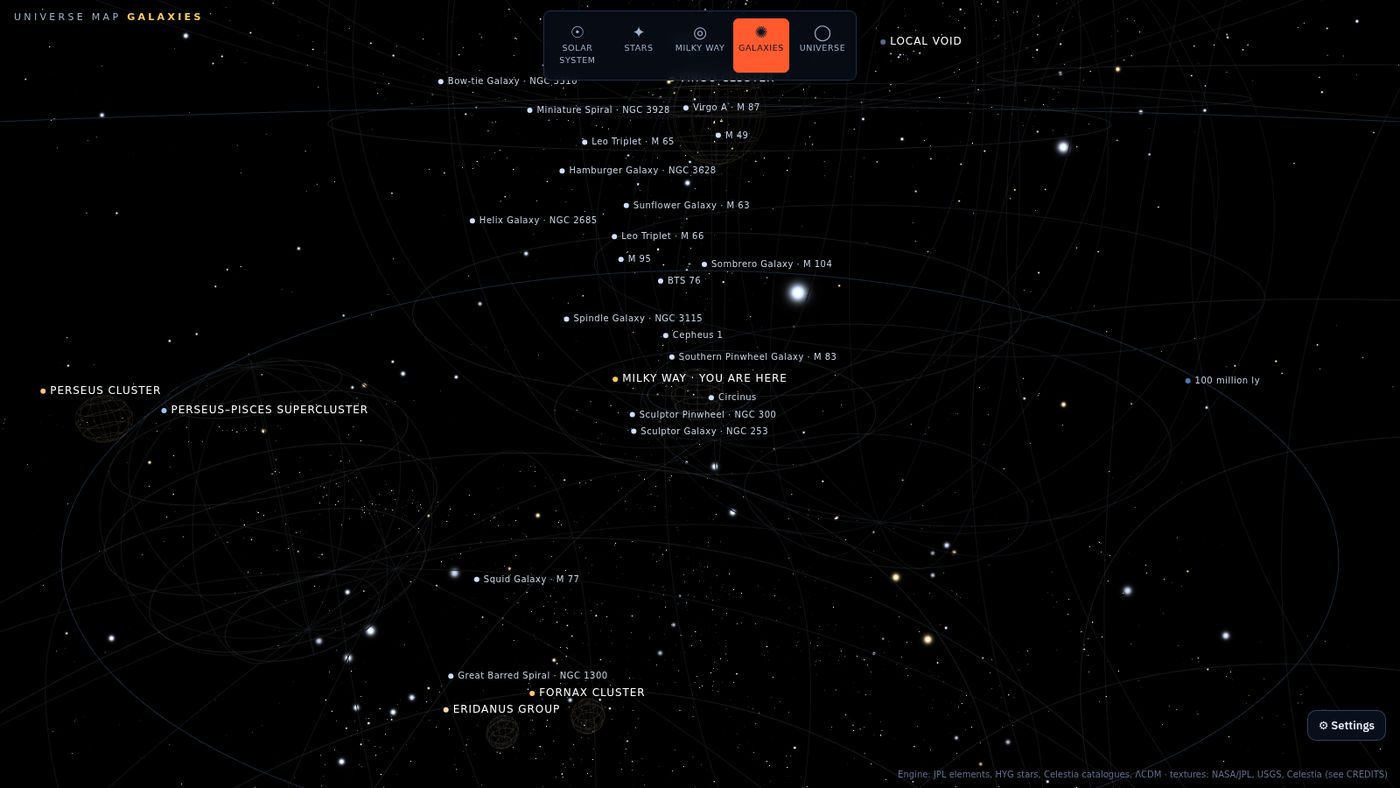
Our corner of the universe: named galaxies, clusters and superclusters at their measured distances.
Two products. Pick where to start.
Reality ASM Open ASM The Universe Map, 83 simulations in physics, chemistry and maths, the chemistry and maths sandboxes, the Space Program and the AI analyst. Open ASM › For schools Open ASM Teach A separate app for schools: the classroom board, 300+ coursework experiments, the Universe Map, both sandboxes and every simulation, with teacher accounts and a school admin panel. Open ASM Teach ›From the Sun to the edge of everything, without a jump cut.
One continuous map in five scales. Scroll to zoom from one to the next, tap anything to read about it, and switch names, constellations and layers on or off in Settings.
Every derivation and practical, live in class
Physics, chemistry and maths across Coursework 1 to 4, chapter by chapter. One library for every school, whichever syllabus it follows. Built for the teacher at the board.
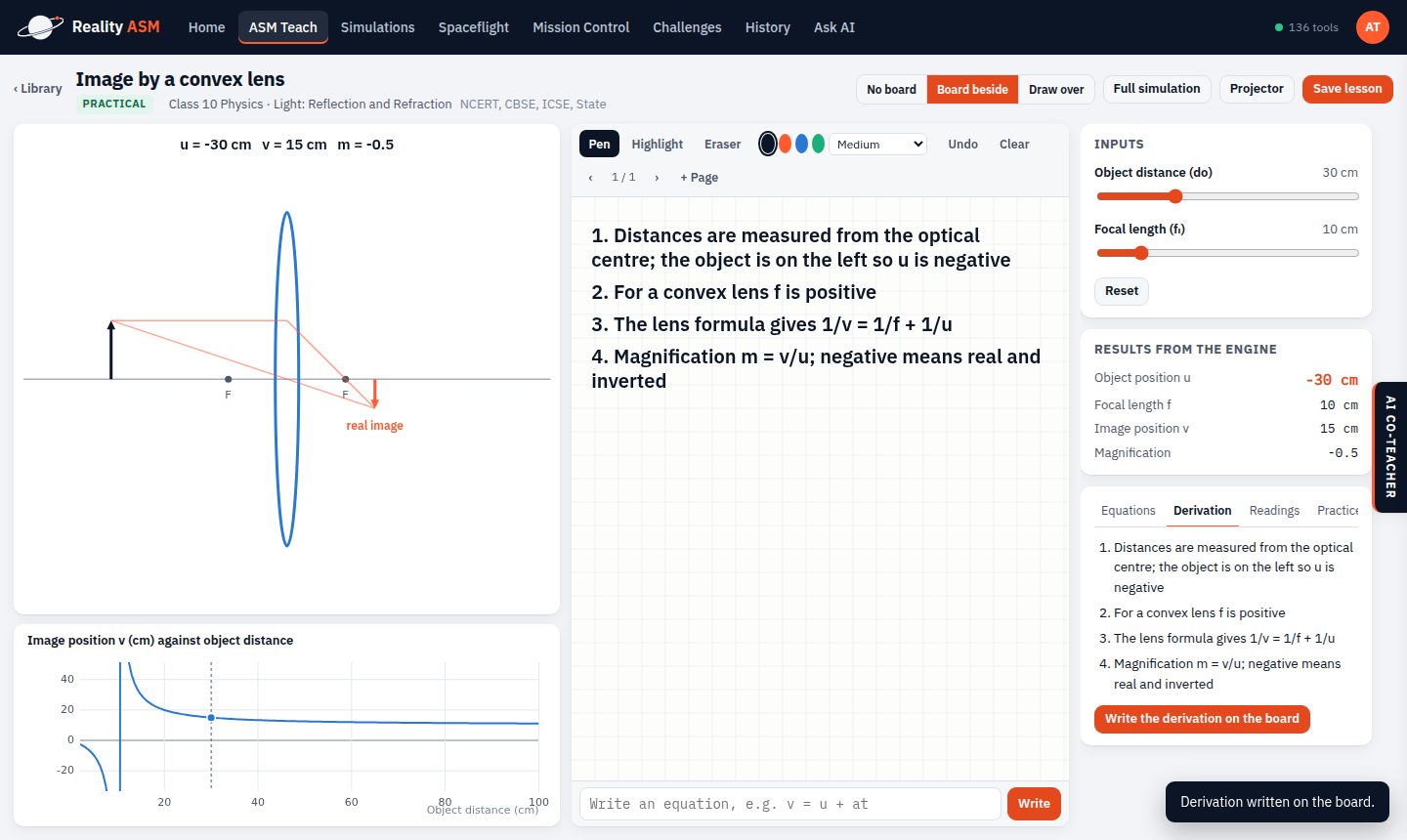
A whiteboard beside every experiment
Draw, write and annotate next to the simulation or right on top of it. Write an equation like T = 2π√(L/g) and the board reads it, opens the matching experiment and rearranges it for any quantity.
The equations and the derivation, one click away
Every experiment shows the formulas behind each number on screen and the derivation step by step, ready to put on the board.
Practice with answers the engine has checked
Fresh numbers every time, four answer choices, worked solutions, and an observation table for practicals. An AI co-teacher explains, suggests questions and lists common mistakes.
Build it from parts. Then fly it.
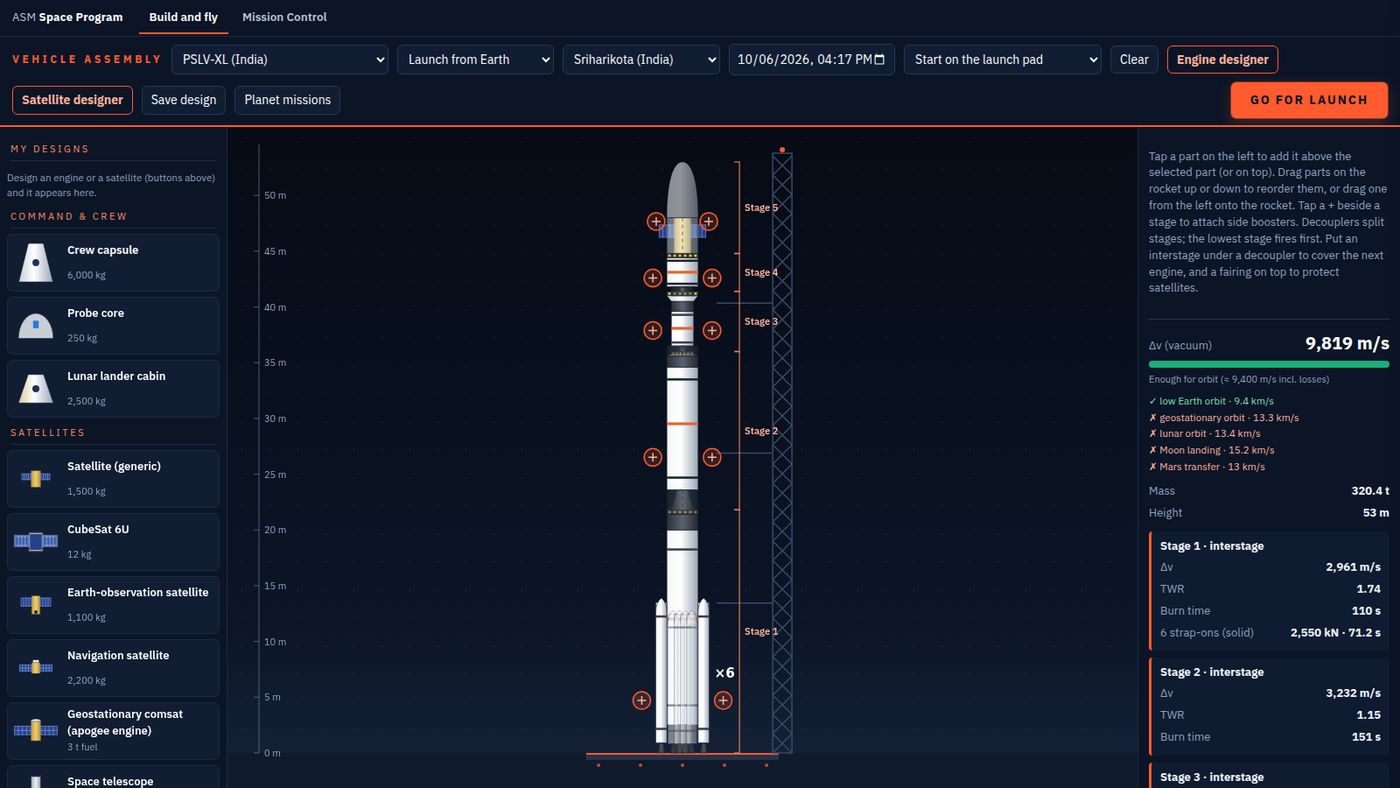
Design an engine from chamber pressure and nozzle size, stack stages, add strap-on boosters and a fairing, and launch on a real date from a real pad. The pad starts empty: build your own, or add PSLV, LVM3, Falcon 9 and the rest.
Real vehicles, real stages
PSLV-XL, GSLV Mk II, LVM3 and SSLV sit next to Falcon 9, Saturn V, SLS, Ariane 5, Soyuz and Long March 5. Each is built from its actual stages, so solid strap-ons burn out and drop away when they should.
- Engine designer with nozzle theory checked against Merlin, RS-25 and Raptor
- Staging, fairings, parachutes and landing legs that change the flight
- Payload estimates you can compare with the published figures
To orbit, to the Moon, and home
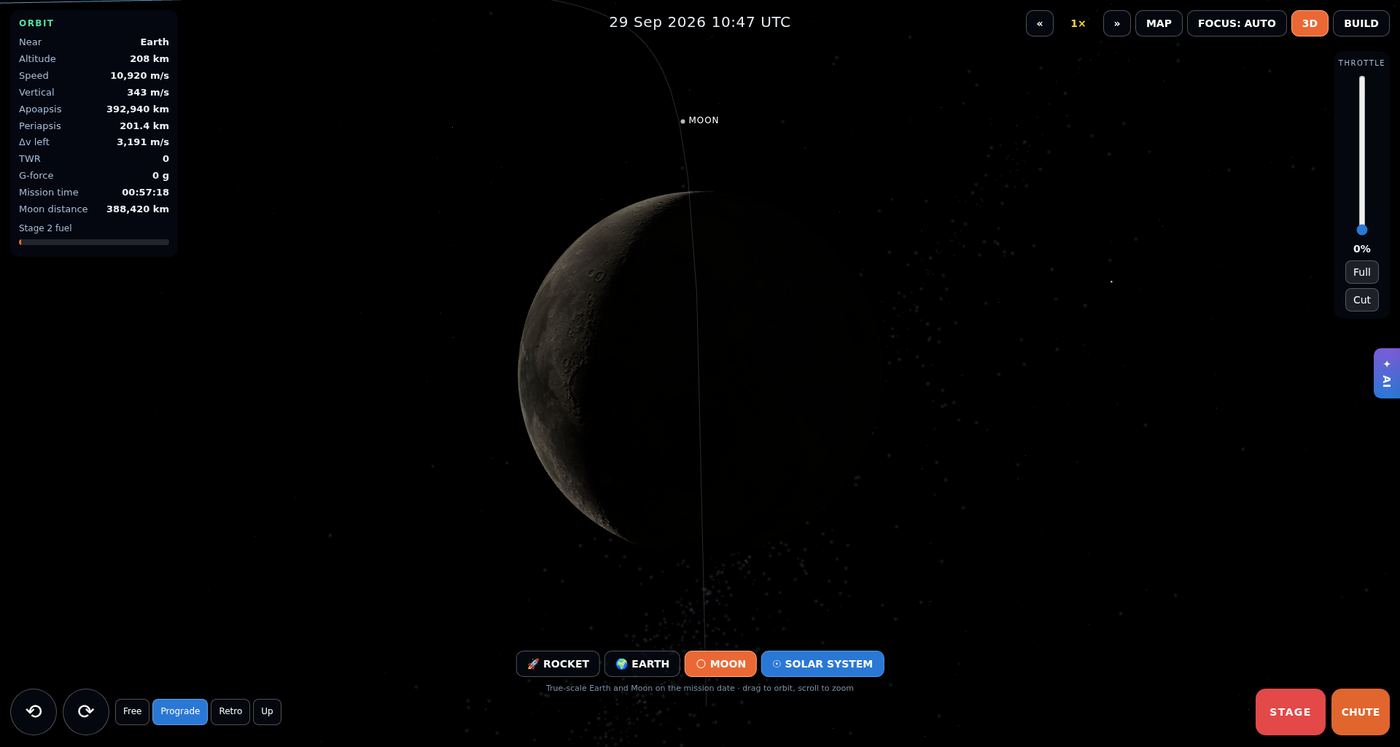
Gravity, drag in a rotating atmosphere and the Moon's pull are integrated as you fly. The HUD tells you when the trans-lunar window opens and how close you'll pass the Moon.
- 2D map and a true-scale 3D view over the real Earth
- Time warp, holds for prograde and retrograde, quick save
- Every flight is saved to your history, so you can pick it up tomorrow
Your satellites keep flying after you log off.
Found a company, buy a launch, and manage a fleet that lives in real time. Low orbits decay with drag; thrusters cost propellant; cameras need daylight.
83 simulations in physics, chemistry and maths
Sorted by subject, with the most powerful first. Each one has an AI analyst beside it that sees the numbers on your screen.
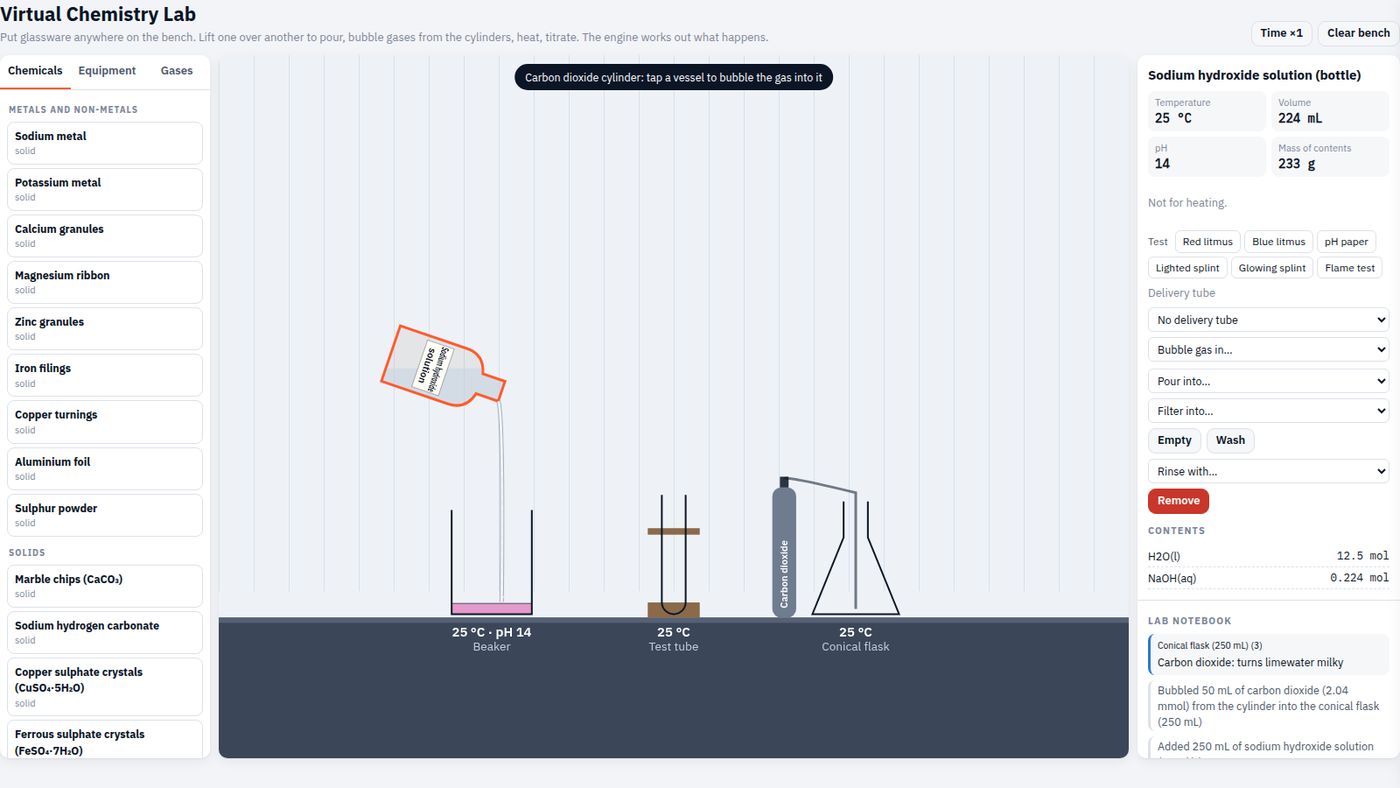
Chemistry: a lab bench you can actually use
72 chemicals, glassware, a Bunsen burner, a burette and gas cylinders. Put things anywhere on the bench, lift a bottle over a beaker and it tilts and pours. The engine balances every equation and works out the heat, the pH, the colour and the gas.
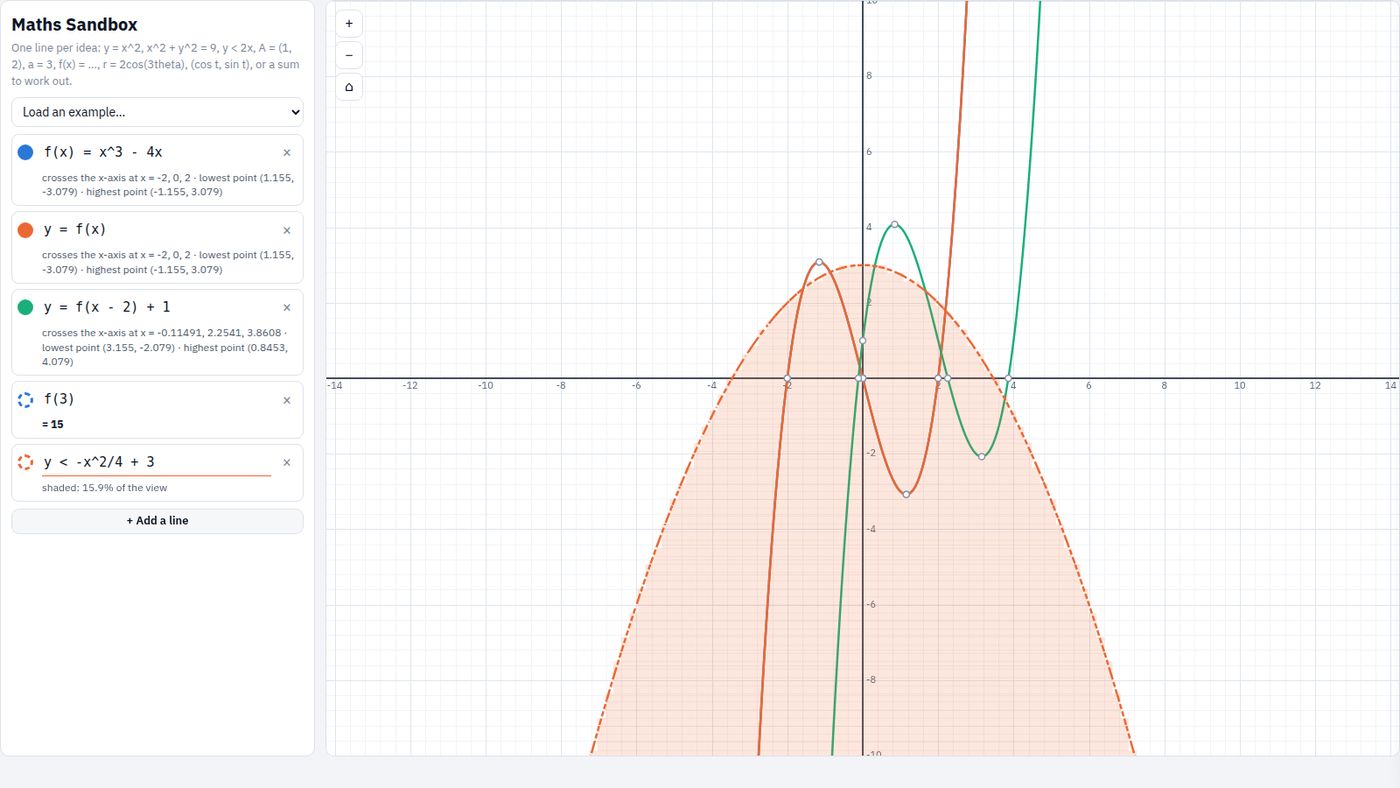
Mathematics: a sandbox for any equation
Type functions, circles, inequalities, points, polar and parametric curves, sliders and your own f(x). Roots, highest and lowest points and crossings appear by themselves, each worked out exactly by the engine.
And many more
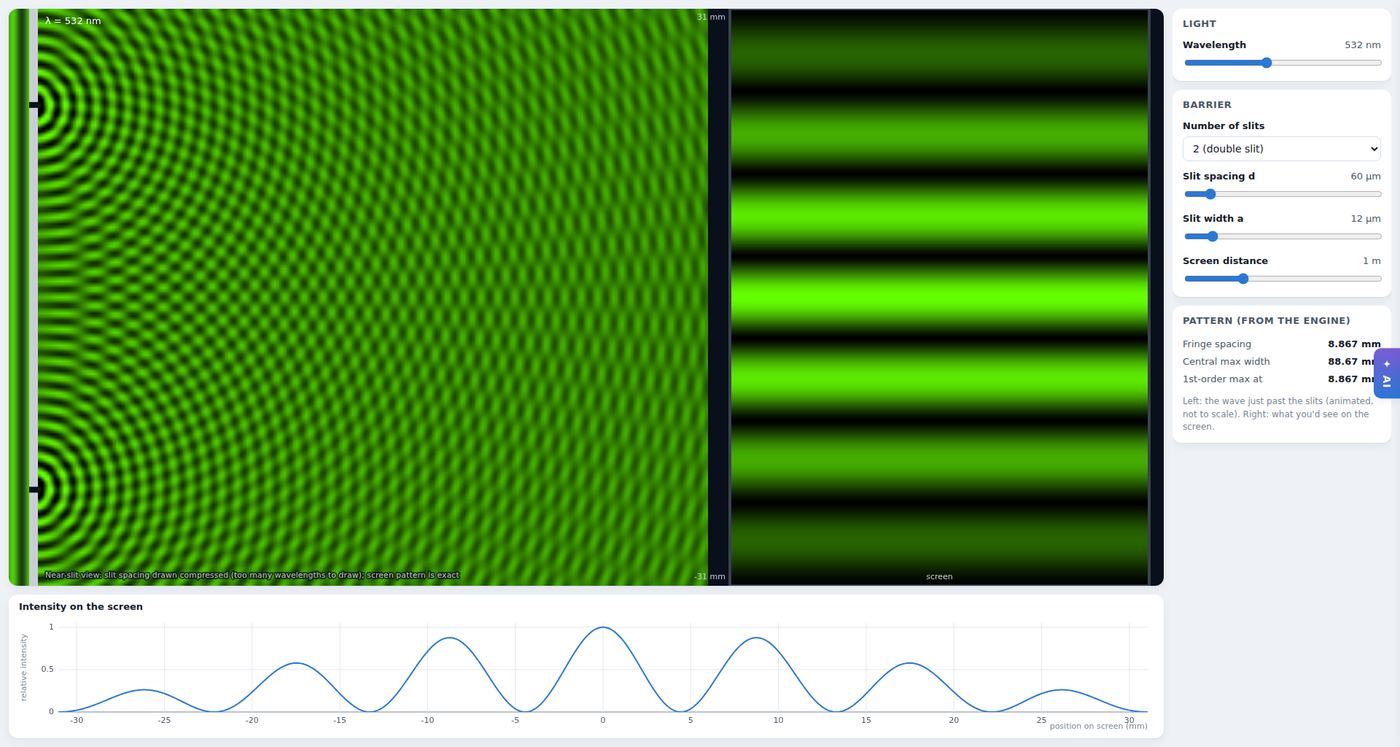
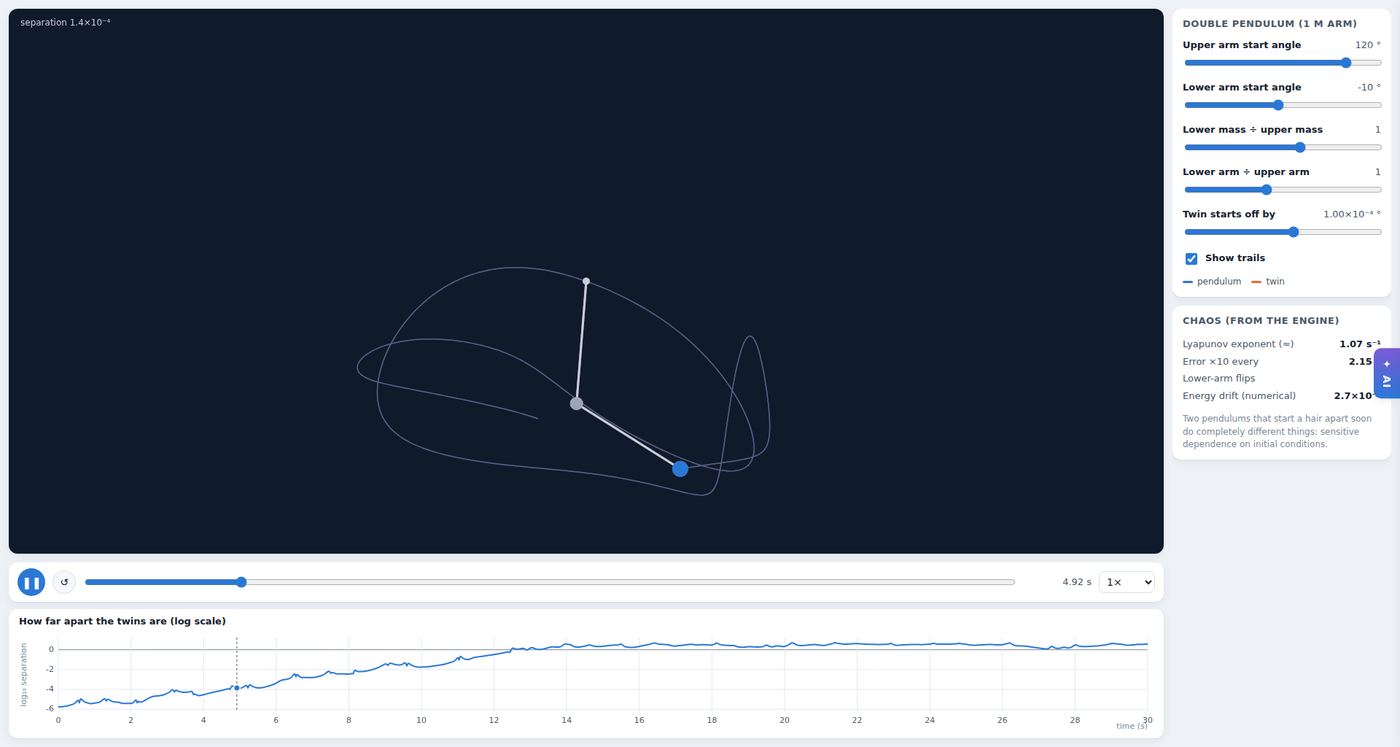
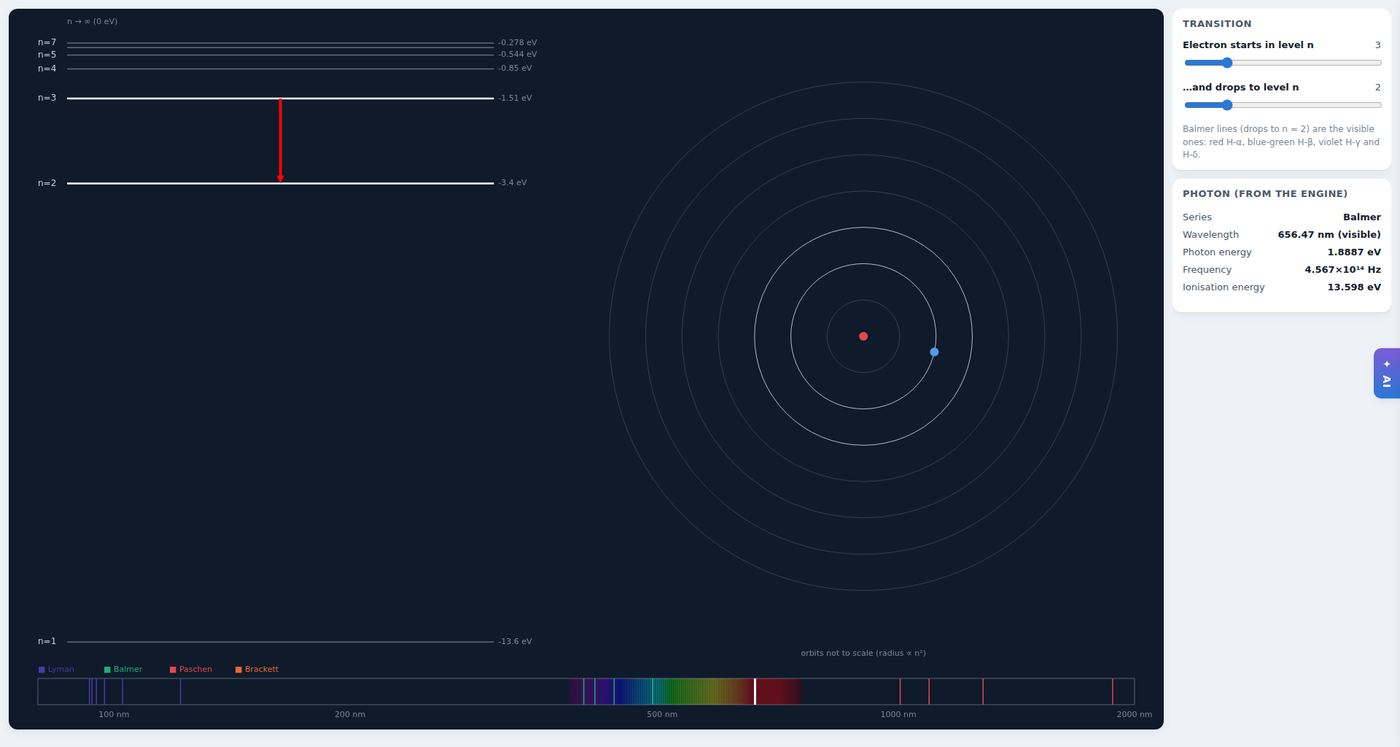
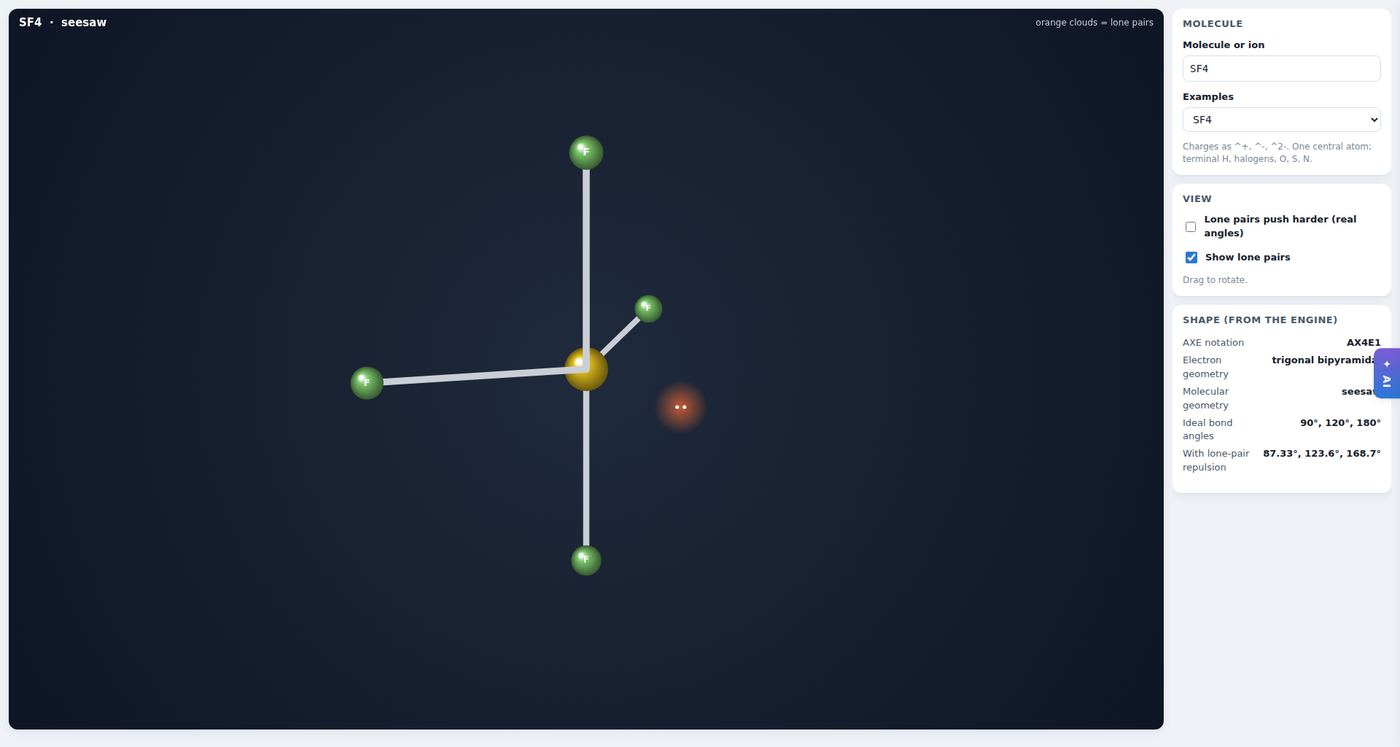
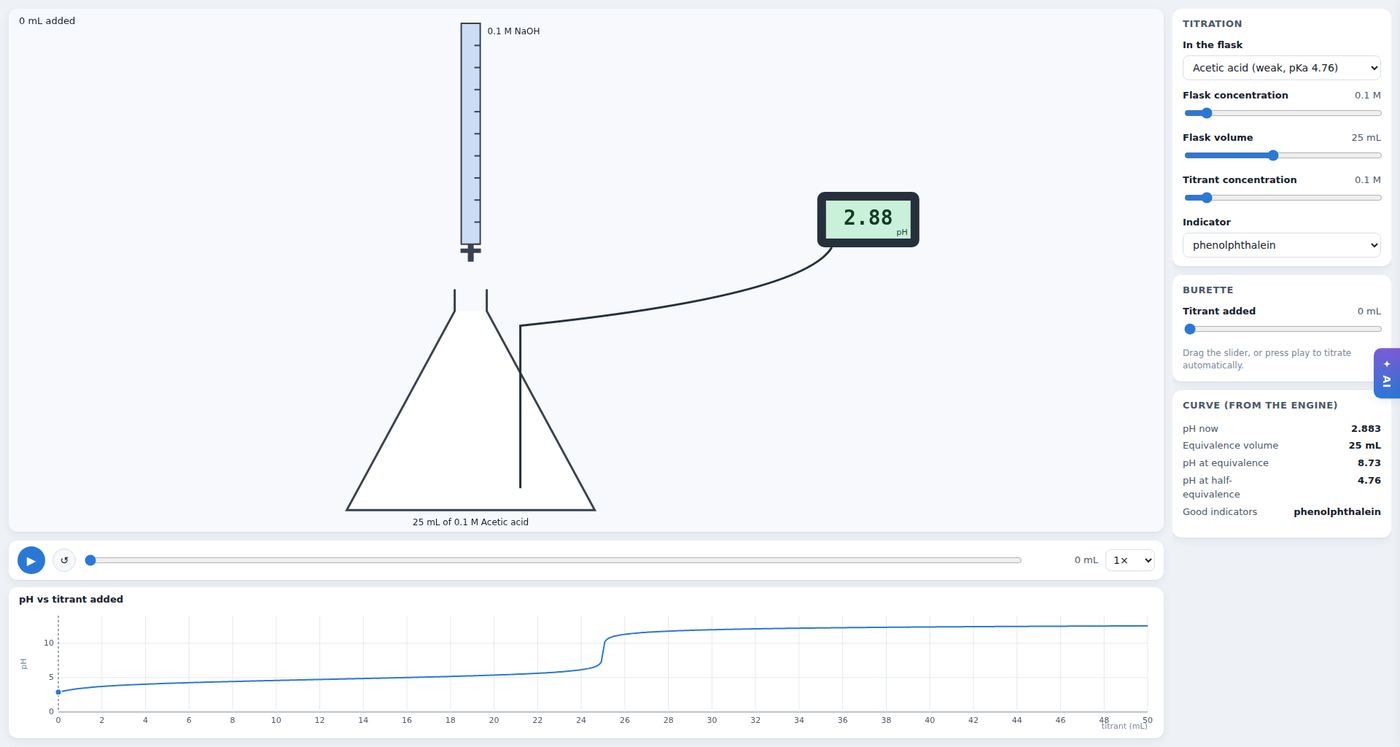
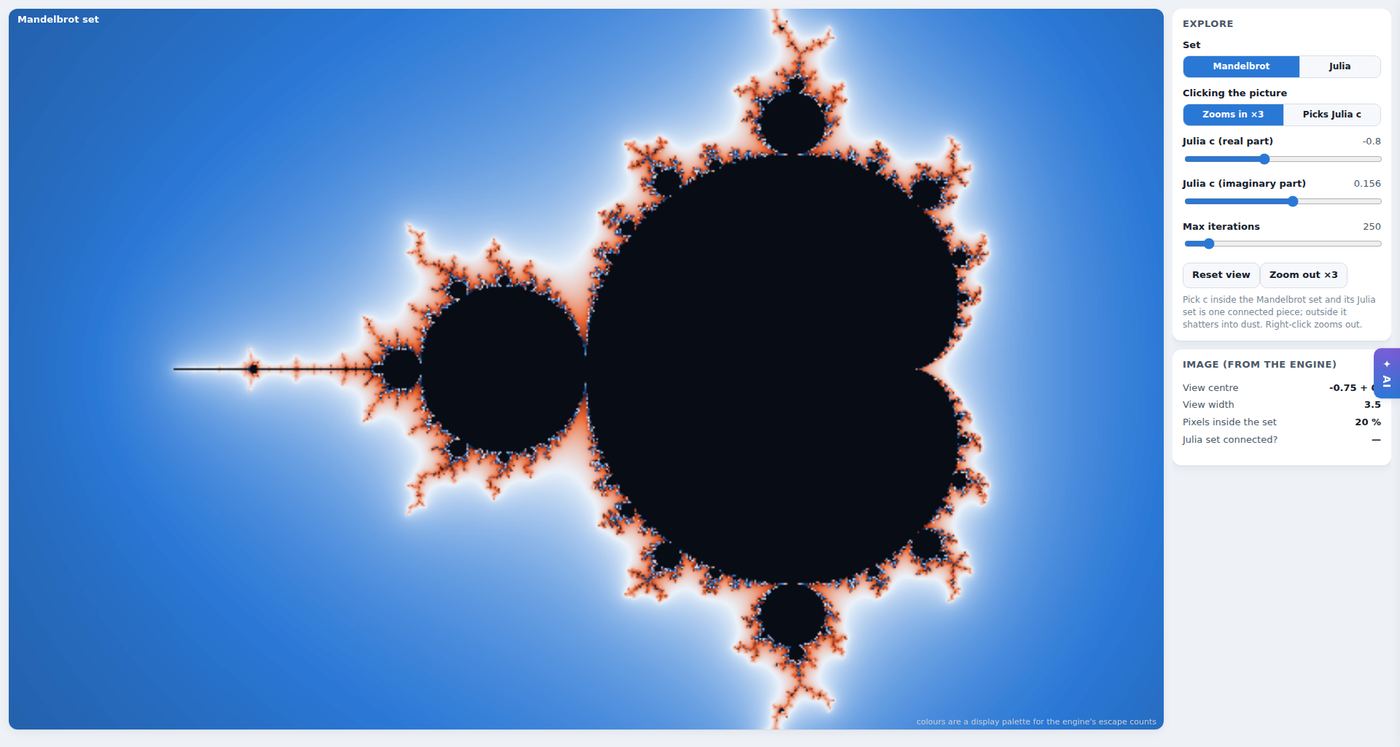
The browser draws. The engine computes.
Every number you see comes from a tested server-side tool built on NumPy, SciPy and SymPy. Your browser only animates the results. A few of the checks it has to pass:
Join the beta
It's free while we test. Tell us what breaks, what's confusing and what you want next.